
Breathing exercises for anxiety at work: four to try at a desk
Breathing exercises for anxiety at work: slow exhale breathing, box breathing, 4-7-8 and the physiological sigh, with steps, timings and when to get help.
The simplest breathing exercise for anxiety at work is to make your out-breath longer than your in-breath: breathe in through your nose for about four counts, then out slowly for six to eight, and repeat for a minute or two. Box breathing, 4-7-8 breathing and the physiological sigh are variations on the same idea, slow breathing with a steady rhythm or an emphasis on the exhale.
All four can be done at a desk, most of them without anyone noticing. The trick is choosing the right one for the moment, and having practiced it before the moment arrives.
Why does slow breathing help with anxiety?
When you feel anxious, your breathing tends to speed up and move high into your chest. Breathing is unusual among the body's automatic systems: it runs by itself, but you can take over whenever you like, which makes it one of the rare levers on stress you can pull on purpose. A long, slow out-breath is generally thought to bring in the calming side of the nervous system, and your heart rate naturally dips a little each time you breathe out.
Studies of slow, paced breathing mostly point the same way, toward feeling calmer for a while afterwards. Many of them are small, though, and none has shown one pattern to be clearly better than all the others. The counting helps too. It hands your mind a simple job and leaves less room for the thought that was spiraling.
Four breathing exercises to try at your desk
Here they are side by side. The timings assume an unhurried count, roughly one count a second.
| Exercise | The pattern | One round | Discreet at a desk |
|---|---|---|---|
| Slow exhale breathing | In for 4, out for 6 to 8 | About 10 to 12 seconds | Yes, even on camera |
| Box breathing | 4 in, 4 hold, 4 out, 4 hold | About 16 seconds | Yes |
| 4-7-8 breathing | In 4, hold 7, out 8 | About 19 seconds | Not really: the out-breath is audible |
| Physiological sigh | Two breaths in, one long breath out | Under 10 seconds | Mostly |
Slow exhale breathing
- Sit back with your feet on the floor and let your shoulders drop.
- Breathe in gently through your nose, counting to four.
- Breathe out slowly, through your nose or through slightly pursed lips, counting to six or eight.
- Repeat for one to three minutes.
Don't force big breaths. The aim is slow and soft, not deep and loud. With no holds to manage, this is the easiest one to keep going while someone else is talking.
Box breathing
Four counts in, four holding, four out, four holding empty, then round again, four times or more. The equal sides make it easy to remember under pressure. Box breathing at your desk has the full steps and a shorter version. If the holds make you uneasy, drop them and use slow exhale breathing instead.
4-7-8 breathing
This pattern was popularized by the physician Andrew Weil, who drew it from yoga breathing practice.
- Empty your lungs through your mouth.
- Close your lips and draw a quiet breath in through your nose to a count of four.
- Hold for seven.
- Let the breath out through your mouth to a count of eight, with a soft whoosh.
- That is one breath. Do four to begin with.
Weil also suggests keeping your tongue tip against the gum ridge behind your top front teeth throughout. The long hold makes this the most demanding of the four, and the whoosh makes it the least discreet. It suits a quiet room, the minute before a hard call or the end of the day better than an open-plan office. If a seven-count hold feels like too much, count faster and keep the same proportions.
The physiological sigh
- Breathe in through your nose until your lungs feel nearly full.
- Sneak in a second, smaller breath through your nose to top it up.
- Let it all go through your mouth, slowly, taking longer than the two breaths in took together.
- One to three of these is enough. Then breathe normally.
It copies the double breath in that people take on their own when they sigh. One study by Stanford researchers, published in 2023, found that five minutes a day of repeated sighs like this, which they called cyclic sighing, lifted mood a little more over a month than the same time spent on mindfulness meditation. That is one study, but the exercise is quick enough to be worth a try. The physiological sigh goes through the research in more detail.
How long should you do breathing exercises for anxiety?
For a spike of anxiety at work, one to three minutes is enough for many people to feel a change, and even three slow breaths can take the edge off. Stop sooner if you feel better. There is no prize for finishing the set.
To make the skill easy to reach for, practice a few minutes on calm days, not only on bad ones. A pattern you have only ever tried in the middle of a panic is hard to follow. A few habits help:
- Pick one and stick with it for a week before trying another.
- Tie it to a cue you already have: a call connecting, a file uploading, the moment before you open a difficult email.
- Keep your eyes open if you prefer. Rest them on something still, such as a spot on the far wall.
- Breathe through your nose on the way in whenever you can. It tends to slow the breath down by itself.
Which one should you use at work?
Each pattern has a moment it suits best.
- On a video call, or in a meeting: slow exhale breathing through the nose. Nobody can tell.
- In the minutes before you present or interview: box breathing, while you wait for people to join.
- Right after a message that made your stomach drop: two or three physiological sighs, then decide whether to reply now or after a walk.
- At the end of a hard day, somewhere private: a few rounds of 4-7-8, to draw a line before the evening.
If the anxiety is about a particular piece of work, a breathing exercise is a way to get calm enough to deal with it, not a way around it. What actually helps with stress at work covers the slower fixes, from sleep to the workload conversation.
When are breathing exercises not enough?
Breathing exercises take the edge off ordinary anxiety. They don't treat anxiety disorders or panic attacks, and they can't fix a job that is the cause. Book time with your doctor, or a therapist, if:
- anxiety gets in the way of your work, sleep or relationships most weeks;
- you have panic attacks, or avoid situations because you fear having one;
- you feel on edge most of the time without a clear reason;
- you need a drink, or something else, to calm down most evenings.
Chest pain, a racing heart that won't settle, trouble breathing or fainting should be checked by a doctor straight away, even if you think it is anxiety. If you ever feel in danger of harming yourself, call emergency services now.
A few cautions for the exercises themselves:
- Stop and breathe normally if you feel dizzy, lightheaded or tingly. It often means you are breathing too fast or too deeply.
- Skip the breath holds, or check with your doctor first, if you are pregnant or have a heart or lung condition.
- Switch if it backfires. Paying close attention to the breath makes a few people more anxious, not less. If that happens, walk for a few minutes or look out of a window instead.
A dragon on breathing duty
Practicing on calm days only works if you remember to, and an ordinary afternoon gives you no reason to. In Notchpals that practice has a slot: the Breathe moment, which belongs to the Self-care characters. It holds off until you have spent roughly ninety minutes at the Mac without a proper break, and it only comes between 10 AM and 8 PM. Boba, the Self-care dragon, is one of the characters who brings it:
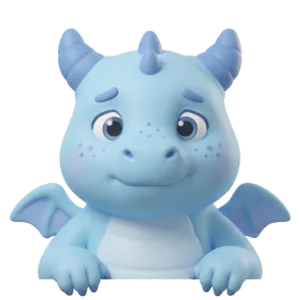
BobaShhh. Three slow breaths. I'll curl my tail around you while you do.
Make them long out-breaths, or turn the first one into a physiological sigh, and press Done when you have breathed.
Be clear about what Boba is and isn't. Notchpals can't tell how you feel, so the nudge comes from the clock, not from your racing heart before a meeting. Those moments are yours to catch. What the regular visits give you is practice on calm afternoons, and that practice is what makes the breathing easy to reach for on the hard ones.
More on self-care
 Self-careBurnout symptoms at work: the signs, and what to do nextBurnout symptoms at work usually come as three: exhaustion rest doesn't fix, growing cynicism, and feeling less effective. How to tell it from a bad week.
- Self-careHow to relax after work when you sit at a Mac all dayHow to relax after work: end the workday on purpose, change rooms or clothes, take a walk, use your hands and keep screens off for the first hour.
 Self-careHow to take a mental health day, and actually restHow to take a mental health day: signs you need one, what to tell your manager, how to spend the day, and daily breaks so you need fewer of them.