
How much water is too much? The real risk and a safe pace
How much water is too much? For a healthy adult sipping at a desk, overdoing it is rare. The real risk, the warning signs and a safe pace.
For a healthy adult sipping through an ordinary desk day, drinking too much water is rare. The real danger comes from drinking a very large amount in a short time, faster than the kidneys can clear it, which dilutes the sodium in your blood. Spread across a day and guided by thirst, the amounts most people drink are nowhere near that.
So the worry is real, but narrow. It belongs to marathons, drinking dares and a handful of medical situations, not to a glass of water beside the keyboard.
What "too much water" actually means
People mean two quite different things by too much water.
The first is ordinary and harmless. You drink more than your body needs right now, your kidneys pass the extra, and you spend the afternoon walking to the bathroom with urine as clear as the water you drank. That is not dangerous. It is just more than you needed.
The second is rare and serious. Its medical name is hyponatremia, which means the level of sodium in your blood has dropped too low. Sodium helps control how water moves in and out of your cells. When a lot of water arrives faster than the kidneys can get rid of it, the blood becomes diluted, water moves into the cells, and the cells swell. Swelling inside the skull is what makes a severe case an emergency. You will also see it called water intoxication.
The word that separates the two is rate. Healthy kidneys can clear a great deal of water over a whole day, but only so much in any one hour. The figure often quoted is roughly a liter an hour at most, and it varies from person to person. Several liters in an hour or two can outrun that. The same amount spread over a waking day does not come close.
Who actually gets into trouble
Dangerous overhydration in healthy adults usually involves an unusual situation, not a desk and a glass of water.
- Long endurance events. Marathons, ultra races and long hikes, especially when people drink at every stop out of fear of dehydration rather than thirst. Hours of sweating lose sodium too, which adds to the problem.
- Drinking contests and challenges. Forcing down large volumes quickly, for a bet or a dare, has led to deaths that made the news.
- Some medicines. Some diuretics (water tablets) and some antidepressants, among others, can make the body hold on to water or lose sodium. If you take a regular medicine and plan to drink a lot more than usual, ask your doctor or pharmacist first.
- Some health conditions. Kidney, heart and liver conditions, and some hormone problems, change how the body handles water. Many people with these conditions are given a fluid limit. If a doctor has given you one, follow it over any general advice, this page included.
If none of that describes you, and you drink when you are thirsty and with meals, your kidneys keep up comfortably.
| Situation | How risky | What to do |
|---|---|---|
| A glass every hour or two at your desk | Very low for a healthy adult | Carry on and let thirst guide you |
| A big bottle finished fast to catch up | Low: mostly a sloshing stomach and bathroom trips | Spread it out next time |
| Several liters within an hour or two | A real risk of diluting your blood sodium | Don't. Drink to thirst |
| Hours of endurance exercise, drinking at every stop | The classic risky setting | Drink to thirst and follow the event's medical advice |
| A doctor's fluid limit, or medicines that affect sodium | Higher | Follow your doctor's advice, not general guides |
What are the signs of drinking too much water?
Start with the everyday signs, the ones that only mean you can ease off:
- Urine that is completely clear, all day long.
- Running to the bathroom far more than usual.
- Forcing water down when you are not thirsty at all.
- A full, sloshing feeling in your stomach.
None of these is dangerous on its own. They are your body telling you it has enough.
The signs of hyponatremia are different, and they are easy to mistake for something else. Mild cases can cause few or no symptoms. When symptoms do show up, health sources list:
- Nausea or vomiting.
- A headache.
- Feeling confused, muddled or unusually drowsy.
- Restlessness or irritability.
- Muscle weakness, cramps or spasms.
- In severe cases, seizures or loss of consciousness.
What matters is the context. Those symptoms after a long race, a drinking challenge, or a few liters downed in a short time are not something to sleep off, and drinking more water to ease the headache can make it worse. Confusion, repeated vomiting, a seizure or fainting is an emergency: call your local emergency number or go to an emergency department. If you are unsure, call a doctor or a nurse line and describe exactly what you drank and when.
Is it bad to chug a lot of water at once?
A liter sipped over a morning and a liter downed in five minutes are the same water, but your body handles them differently.
When a large amount arrives at once, your body quickly turns down a hormone called vasopressin, which normally tells the kidneys to hold on to water. With that signal lowered, the kidneys let go, and within an hour or so much of what you drank is on its way out. That is why the late afternoon catch-up, a whole bottle at 4 PM because you forgot all day, so often turns into a string of bathroom trips. For a healthy adult, one big bottle drunk fast is unlikely to be dangerous. It is just uncomfortable, and it does nothing for you that the same water sipped across a few hours would not do better.
Sipping gives you the benefit without the slosh. It also keeps you honest: with a glass in reach, you drink a bit when you feel like it, and you notice sooner when you have had enough.
How much water is safe in a day?
There is no single upper number for healthy adults, because it depends on how fast you drink and on heat, exercise, body size and health. What the official figures give you is a sense of normal. The US National Academies suggest about 2.7 liters of total water a day for women and about 3.7 liters for men, counting food as well as drinks, and European figures are lower. These are "adequate intakes", not targets to beat, and drinking far beyond them on a mild day at a desk brings no known extra benefit. How much water should you drink at work sets the official numbers out in full.
Is a gallon of water a day too much?
A US gallon is about 3.8 liters. Spread across a whole waking day, that is usually within what healthy kidneys can handle, but for most people sitting in a comfortable office it is more than they need from drinks, and the main result is more trips to the bathroom. For anyone on a fluid limit, it may be far too much. If you are tempted by a gallon challenge, ask yourself what it is for. Thirst and the color of your urine will usually tell you more than a target will.
How to pace water through a workday
You don't need a number. You need a rhythm that keeps you away from both ends: the dry morning and the panicked catch-up.
- Drink when you are thirsty, and with meals. For most healthy adults at a desk, that alone lands in a sensible range.
- Keep a glass in sight, and keep it modest. A glass you can see gets sipped. A big bottle in a bag gets forgotten, then finished in one go at 4 PM.
- Never make up a whole morning at once. One glass at a normal pace, then back to sipping.
- Drink more on hot days and around exercise, and spread that out too.
- Let the evening go quiet. A few sips after dinner is plenty for most people.
- Glance at the color now and then. Pale straw is the aim. Clear all day means ease off. Dark yellow means have some more.
If bathroom trips are what put you off drinking at all, drinking more water without peeing all the time covers how to even them out.
A water reminder that never pushes
If you use a reminder for water, it should nudge, not push. Notchpals, a Mac app that turns reminders into short visits from characters in the notch, has three Water characters, and your crew has room for one: Melo, Puddle or Lolo, a permanently cheerful axolotl. Whichever you choose is spaced out on purpose: one morning visit for your first glass, a water reminder now and then until 8 PM, and one in the afternoon. The repeating ones come out of a single daily allowance shared with the rest of your crew, and even the busiest setting, Chatty, leaves 40 minutes or more between them. Nothing in it is built to make you finish a bottle.
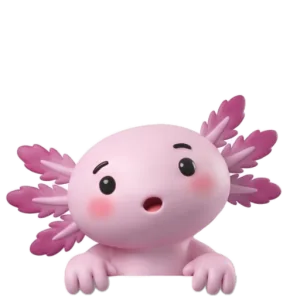
LoloQuick question. Have you had water lately? No? Then that's the plan!
There is no liter target, no score and no record of what you drank. Done means whatever you made it mean: a full glass, or a couple of sips because you had one half an hour ago. And after 8 PM the water visits stop, which leaves the evening to thirst.
More on water
 WaterHow to drink more water when you hate the taste of waterHow to drink more water when you hate water: fix the taste and the temperature, flavor it without sugar, try sparkling or herbal tea, and eat some of it.
 WaterHow to drink more water with ADHD (or a brain that forgets)Out of sight, out of mind. How to drink more water with ADHD: bottles you can see, cues tied to meetings and app switches, novelty and reminders that are kind.
 WaterWater reminders on iPhone, Apple Watch and MacSet water reminders on iPhone, Apple Watch and Mac with Reminders, Health and Shortcuts, where each one falls short, and how a reminder in the notch differs.